
What No One Tells You Before You Start Working as an MRI Tech
You studied hard, passed your registry exam, and landed your first job as an MRI tech. You feel ready. And then your first week hits and you realize school prepared you for a lot of things, but not for everything. Here's what most new MRI techs wish someone had told them before day one.
The Protocols Are Different Everywhere
In school you learned a standard way to do things. In the real world every facility has its own protocols, its own sequences, and its own way of doing things. What your clinical site called a FLAIR might be named something completely different at your new job. The sequences might be in a different order. The slice thickness might be set differently. Give yourself time to learn the house way before trying to change anything.
Patients Will Test Your Patience
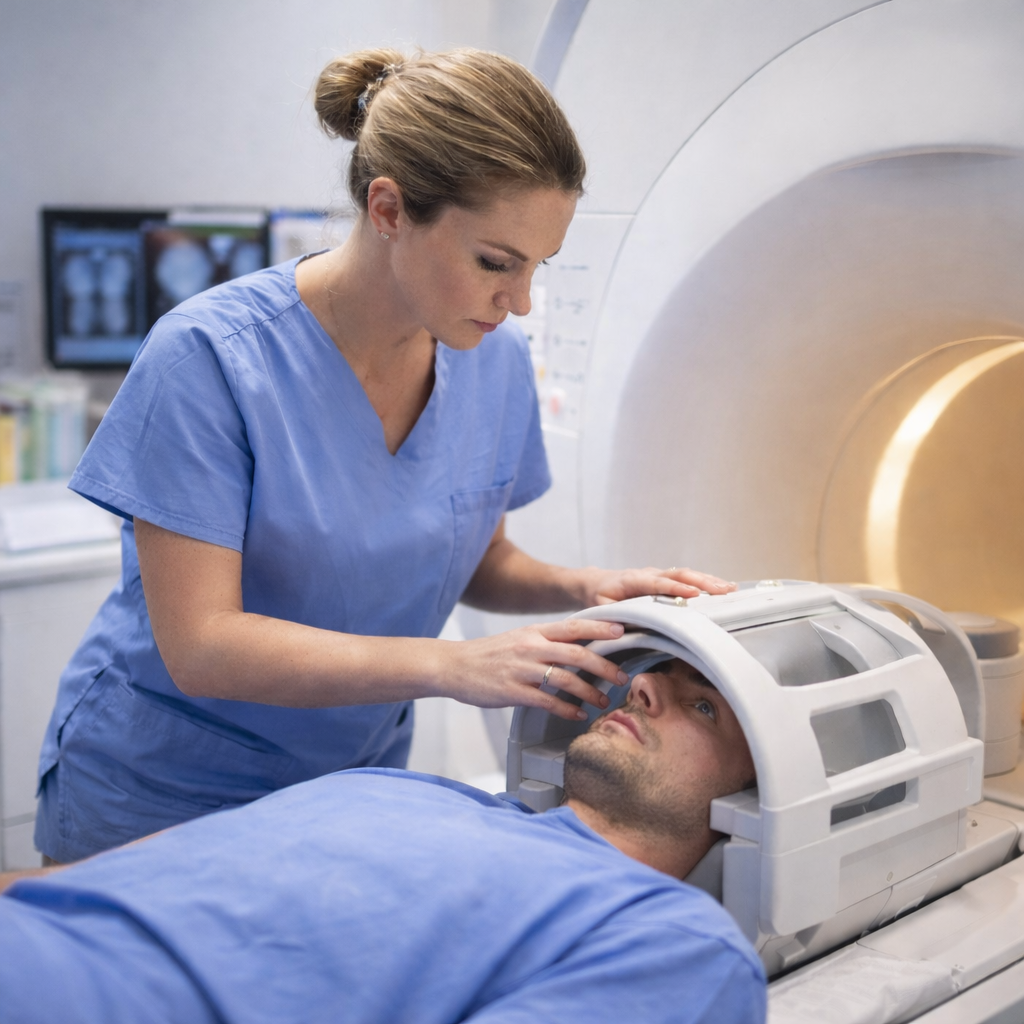
No amount of clinical training fully prepares you for the full range of patients you will encounter. Claustrophobic patients, uncooperative patients, patients in severe pain, patients who cannot hold still no matter how many times you ask. You will need to develop your own approach to calming people down and getting the scan done. It takes time and it gets easier, but your first few months will challenge you in ways that have nothing to do with MRI knowledge.
MRI Safety Never Gets Routine
You will hear techs who have been doing this for 20 years say things that make your hair stand up. Complacency is the biggest safety risk in an MRI suite. Never let a busy day or a rushed schedule make you skip your safety screening. One missed implant, one overlooked device, one person who slipped through without being properly screened, that is all it takes. Take MRI safety seriously every single time, no exceptions.
You Will Feel Slow at First and That Is Normal
New grads almost always feel like they are behind. Scans take them longer. They second guess their images. They ask more questions. This is completely normal. Speed comes with repetition. Image quality judgment comes with experience. Give yourself at least 6 months before you start comparing yourself to techs who have been doing this for years.
Your Radiologists Are a Resource
A lot of new techs are intimidated by radiologists and avoid asking questions. That is a mistake. Most radiologists are happy to explain what they are looking for and why certain sequences matter for certain pathologies. The more you understand the clinical side of what you are imaging, the better tech you will become. Ask questions when the timing is right.
Continuing Education Is Not Optional
Once you are registered, you need CE credits to maintain your credential. ARRT requires 24 CE credits every two years. This is your responsibility, not your employer's. Stay on top of it so you are not scrambling at the last minute. Look for ASRT-approved CE activities that are relevant to MRI so you are actually learning something, not just checking a box.
The First Year Is the Hardest
Everything is new, the equipment, the team, the patients, the workflow, the politics of a new workplace. It is overwhelming at times. But almost every experienced MRI tech will tell you the same thing: push through the first year and it gets significantly better. The skills become second nature, the confidence builds, and you start to really enjoy the work.
You chose a great field. Give yourself the grace to be new at it.
Written by Pass MR